2026-06-16
Steam cleaning is the process of using water heated above 100 degrees Celsius under pressure to produce superheated steam that dissolves grease, loosens embedded dirt, kills bacteria and dust mites on contact, and sanitizes surfaces without requiring any chemical cleaning agents. The steam penetrates porous materials and microscopic surface irregularities where conventional cloths, sprays, and scrubbers cannot reach, making it one of the most effective deep-cleaning methods available for residential and commercial environments.
The four main tool categories that deliver steam cleaning are: the Handheld Steam Cleaner (compact, lightweight, fast heating, ideal for targeted spot cleaning); the steam mop (upright, floor-focused, with microfiber pad); the cylinder steam cleaner (large tank, multi-attachment, most versatile for whole-home use); and the vacuum cleaner with steam cleaning function (combines dry vacuum suction with steam, completing two tasks in one pass). A fourth specialized category is the portable steamer for cleaning with air compressor technology, used in commercial detailing, restoration, and industrial maintenance applications where pressurized air assists steam delivery into confined or complex surfaces.
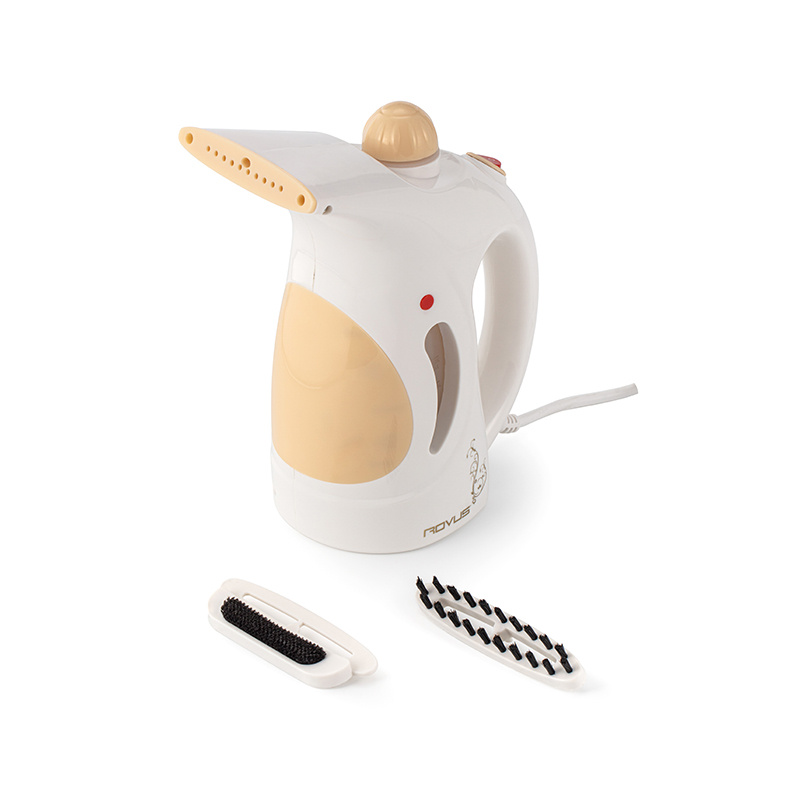
For the majority of home users, the best handheld steamer for cleaning is a 1,000 to 1,500 watt Handheld Steam Cleaner with 3 to 4 bar operating pressure, a 250 to 350 ml water tank, and a kit of at least four attachments covering jet nozzle, round brush, flat pad, and fabric nozzle. This single tool handles bathroom fixtures, kitchen appliances, tile grout, upholstery, and vehicle interiors without the bulk or setup time of a full cylinder unit.
Understanding what is steam cleaning at the physical and biological level clarifies why it outperforms conventional cleaning methods for specific tasks and why it cannot replace all cleaning methods for every application. This knowledge prevents both over-reliance on steam and under-utilization of a genuinely powerful cleaning technology.
When water is heated above its boiling point (100 degrees Celsius at sea level) in a sealed pressure vessel, it converts to steam that contains substantially more thermal energy per unit mass than liquid water at the same temperature. This is called latent heat of vaporization. When pressurized steam exits the nozzle of a steam cleaner and contacts a cooler surface, it rapidly releases this stored thermal energy as it condenses back toward liquid form. This rapid heat transfer is what makes steam cleaning so effective: the surface temperature rises sharply and rapidly, dissolving grease (which becomes fluid and non-adhesive at elevated temperature), destroying microorganisms (whose proteins denature irreversibly at 55 to 75 degrees Celsius for most pathogens), and loosening mineral scale (which cracks and separates from the surface under thermal stress).
A quality Handheld Steam Cleaner or cylinder unit operating at 3 to 4 bar produces steam at 130 to 160 degrees Celsius at the nozzle outlet, well above the threshold needed for effective grease dissolution, limescale softening, and pathogen elimination. Budget models operating at or below 1 bar produce steam at 100 degrees Celsius or below, which is significantly less effective for these tasks and represents a common source of disappointment for first-time buyers who select on price alone.
Temperature thresholds for pathogen destruction are well documented in food science and public health literature, providing the scientific basis for steam cleaning's sanitizing claims:
Knowing what is steam cleaning in terms of appropriate surface compatibility prevents costly damage to flooring, furniture, and appliances:
Knowing how to use a steam cleaner correctly is as important as buying the right machine. Incorrect technique wastes cleaning effectiveness, risks surface damage, and can create burn hazards. The following guidance covers setup, general operating technique, and application-specific methods for the most common cleaning tasks.
Tile grout cleaning is one of the most dramatically effective applications of steam cleaning, producing results in minutes that would require chemical treatment and extended scrubbing to equal. The correct technique:
The kitchen benefits more from steam cleaning than any other room because cooking grease responds exceptionally well to thermal treatment. Steam cleaning a greasy cooktop after a week of cooking typically takes 5 to 10 minutes compared to 20 to 30 minutes of chemical soaking and scrubbing, and leaves no chemical residue on food preparation surfaces. Key technique points:
Steam cleaning fabric surfaces requires different technique from hard surface cleaning. The goal is to deliver sanitizing heat while limiting moisture deposition that would take hours to dry and could encourage mold growth in the foam or filling beneath the fabric:
The Handheld Steam Cleaner is the most practically versatile steam cleaning format for most households because it combines rapid heat-up, targeted application, lightweight portability, and sufficient steam output for the majority of cleaning tasks that benefit from steam treatment. Understanding the key specifications prevents buying a unit that looks impressive in marketing but underperforms in actual use.
Wattage determines how fast the Handheld Steam Cleaner heats water and how long it can sustain steam output before the boiler temperature drops during continuous use. Units rated at 1,000 to 1,500 watts produce genuinely effective steam for cleaning purposes. Units below 700 watts typically produce steam at insufficient temperature and pressure for effective grease removal and pathogen elimination on hard surfaces.
Operating pressure (measured in bar or PSI) determines the steam temperature at the nozzle outlet and the force with which steam penetrates surface pores and crevices. The relationship between pressure and steam temperature follows the steam saturation curve:
The water tank of a Handheld Steam Cleaner determines how long a continuous cleaning session can run before refilling is necessary and how long the wait is before refilling is safe. Most Handheld Steam Cleaner models require a depressurization and cooldown period of 2 to 5 minutes before the cap can be safely opened for water addition:
| Tank Size | Continuous Steam Time | Best Suited For | Weight Impact |
|---|---|---|---|
| 100 to 150 ml | 8 to 12 minutes | Quick spot cleaning, single room tasks | Lightest (below 1 kg) |
| 200 to 300 ml | 15 to 20 minutes | Most household tasks, multi-surface sessions | Moderate (1.0 to 1.5 kg) |
| 350 to 500 ml | 25 to 35 minutes | Extended sessions, vehicle detailing, commercial use | Heavier (1.5 to 2.0 kg) |
A Handheld Steam Cleaner without an appropriate attachment kit is severely limited in practical usefulness. The attachments that distinguish a versatile Handheld Steam Cleaner from a basic one are:
Identifying the best handheld steamer for cleaning requires distinguishing between marketing specifications and the performance characteristics that determine real-world cleaning results. The following analysis covers the characteristics that genuinely separate top-performing Handheld Steam Cleaner products from budget alternatives that disappoint in regular household use.
The most reliable evaluation of the best handheld steamer for cleaning performance uses three practical tests that correlate with real-world cleaning outcomes:
The vacuum cleaner with steam cleaning function represents a category of machine that performs both dry vacuuming and steam floor cleaning in a single device, eliminating the need to switch between two separate tools when cleaning hard floors and carpets. Understanding how these combination units work and where they deliver genuine value helps buyers decide whether this format or separate specialized tools better serves their needs.
A vacuum cleaner with steam cleaning typically incorporates two separate functional systems within the same machine body: a conventional vacuum motor and filtration system that creates suction to collect dry debris, and an independent water tank and heating element that generates steam for floor sanitizing. These two systems operate either sequentially (the user switches between vacuum and steam modes) or simultaneously (both systems run at the same time, with the steam delivered ahead of the suction nozzle so that steam-loosened soil is immediately collected by the vacuum).
The simultaneous operation model is significantly more efficient for floor cleaning tasks because it eliminates the need to pass over each floor area twice (once to vacuum and once to steam), reducing total cleaning time by 30% to 50% compared to using separate vacuum and steam mop tools sequentially. Vacuum cleaners with steam cleaning that operate both functions simultaneously are particularly well suited to households with pets, where dried pet dander, hair, and tracked-in soil appear on hard floors alongside microscopic allergens that vacuuming alone does not eliminate but steam sanitizing does.
The portable steamer for cleaning with air compressor is a specialized category of steam cleaning equipment that combines steam generation with a compressed air supply, using the compressed air to deliver steam under higher effective pressure than a steam only unit can achieve, or to follow steam application with a powerful air blast that clears loosened soil and moisture from crevices and complex surface geometries.
In the most common configuration, the portable steamer for cleaning with air compressor uses two separate but coordinated systems: an electric steam generator that produces steam at 4 to 8 bar, and a compressed air supply (either an integral compressor or connection to an external air compressor) that provides pressurized dry air at 4 to 10 bar. These two streams can be used separately or mixed at the nozzle to produce steam-air mixtures or sequential steam-then-air applications.
The air compressor component adds capability that steam alone cannot provide:
For standard household cleaning tasks, the portable steamer for cleaning with air compressor is not necessary and represents significant over-specification. The additional complexity, noise from the compressor, and cost (professional portable steam-air units start at USD 400 to USD 1,200) are not justified for residential use where a quality Handheld Steam Cleaner at USD 50 to USD 150 delivers adequate performance for all household steam cleaning applications.
Even the best handheld steamer for cleaning loses performance over time without appropriate maintenance. The majority of steam cleaner failures and performance degradation issues are preventable through two routine maintenance practices: descaling and correct storage.
Mineral scale from tap water accumulates inside the boiler, heating element, and steam channels of any steam cleaner used with unfiltered tap water. Scale acts as a thermal insulator on the heating element, forcing it to draw more power to heat the water to operating temperature, reducing efficiency and eventually causing overheating failure of the heating element. Scale in the steam channels restricts steam flow, reducing output pressure and steam quality. Scale buildup is the primary cause of premature steam cleaner failure and performance decline, and it is entirely preventable through the combination of distilled water use and regular descaling.
Descaling procedure for most Handheld Steam Cleaner and cylinder steam cleaner models:
Descaling frequency depends on water hardness and whether distilled or tap water is used. With tap water in a hard water area (above 200 mg/L calcium carbonate), descale every 4 to 6 weeks of regular use. With distilled water, descale every 3 to 6 months.
Steam cleaning is the process of applying pressurized water vapor heated above 100 degrees Celsius to surfaces, using the thermal energy of the steam to dissolve grease, loosen mineral deposits, and kill microorganisms without chemical cleaning agents. It genuinely sanitizes when the steam temperature at the surface contact zone exceeds the lethal threshold for the target pathogen: 55 to 60 degrees Celsius for dust mites, 70 to 75 degrees Celsius for common bacteria. A properly operating Handheld Steam Cleaner at 3 to 4 bar produces nozzle steam temperatures of 133 to 145 degrees Celsius, far exceeding all household pathogen lethal thresholds and providing genuine sanitization on contact. However, it achieves sanitization (significant reduction of pathogen load), not sterilization (complete elimination of all microorganisms including endospores), which requires higher temperature and pressure conditions than consumer steam cleaners produce.
To use a steam cleaner safely, follow these rules: never point the steam nozzle toward your own skin or toward other people or pets; keep the nozzle moving continuously rather than holding it stationary against a surface, which reduces the chance of accidentally contacting skin during operation; always attach accessories before switching the unit on to avoid pressurized steam escaping from the exposed nozzle connector; allow the unit to fully depressurize before opening the water tank cap for refilling (indicated by the manufacturer's cooldown time, typically 2 to 5 minutes); and keep children out of the cleaning area while any steam cleaning is in progress. Wearing rubber gloves during steam cleaning tasks reduces burn risk if steam accidentally contacts the hands during nozzle repositioning.
The best handheld steamer for cleaning kitchen grease operates at 3 to 5 bar steam pressure (corresponding to steam temperatures of 133 to 152 degrees Celsius), which is the range at which cooking grease viscosity decreases to near zero and the grease detaches from surfaces with minimal wiping force. Key specifications to verify: rated power of 1,000 to 1,500 watts minimum, operating pressure clearly stated at 3 bar or above, a flat pad attachment or rectangular nozzle for broad cooktop surface coverage, and a jet nozzle for grease accumulated in burner recesses and appliance crevices. A unit meeting these criteria from a reputable brand with verifiable safety certification (CE, UL, or equivalent) will outperform any budget unit regardless of marketing claims.
A vacuum cleaner with steam cleaning combination unit offers genuine convenience for hard floor maintenance by completing two tasks in one pass, reducing total floor cleaning time by 30% to 50% compared to vacuuming and steam mopping sequentially with separate tools. However, the steam systems in combination units are typically limited to floor use at modest pressure (1 to 2 bar), meaning the steam function is less effective for heavy grease, bathroom mold, and grout than a dedicated Handheld Steam Cleaner at 3 to 5 bar. The combination unit is the best choice for households that primarily need efficient hard floor maintenance and are willing to supplement with a separate Handheld Steam Cleaner for above-floor tasks. For households where above-floor steam cleaning is infrequent, the combination unit may eliminate the need for a separate steam mop while providing most required functionality.
A portable steamer for cleaning with air compressor is warranted when the cleaning application requires forcing steam and air into enclosed spaces that a standard Handheld Steam Cleaner cannot reach effectively (such as automotive air vents and engine bays), when immediate drying of the cleaned surface is necessary to prevent moisture-related issues (automotive body panels, electronics housings), or when commercial cleaning volumes and surfaces (restaurant equipment, industrial machinery) exceed the practical capacity of a consumer Handheld Steam Cleaner. For standard household cleaning including bathrooms, kitchens, floors, and upholstery, a quality Handheld Steam Cleaner at 3 to 4 bar is entirely sufficient and represents significantly better value than a portable steamer for cleaning with air compressor unit, which starts at several times the cost of a quality consumer Handheld Steam Cleaner.
Descale your Handheld Steam Cleaner every 4 to 8 weeks of regular use if using tap water in a moderately hard water area (100 to 200 mg/L calcium carbonate hardness). In very hard water areas (above 300 mg/L), descale every 2 to 4 weeks. With consistently distilled water, descale every 3 to 6 months. Early warning signs that descaling is overdue include: visible white mineral deposits around the nozzle outlet, reduced steam flow rate or steam that feels wetter than usual, longer heat-up time than when the unit was new, and the unit switching off at lower intervals due to the heating element working harder against scale insulation. Using distilled water consistently is the single most effective measure for extending descaling intervals and prolonging machine life.
Yes, a Handheld Steam Cleaner is one of the most effective tools for mattress hygiene maintenance, particularly for dust mite control. Use the fabric nozzle attachment (wide diffuser) held 3 to 5 cm from the mattress surface in slow, overlapping passes across the entire sleeping surface and side panels. The steam penetrates the mattress cover fabric and kills dust mites and their allergens in the surface layer of the mattress filling. After steaming, open windows and direct a fan at the mattress surface for 1 to 3 hours before remaking the bed to ensure complete drying. Monthly mattress steaming is recommended for allergy sufferers and households with pets; quarterly is adequate for households without specific dust mite sensitivity concerns.
Distilled or demineralized water is the best choice for any steam cleaner, including both Handheld Steam Cleaner and cylinder units. Distilled water contains no dissolved minerals and therefore forms no scale deposits inside the boiler, maintaining consistent steam pressure and temperature performance throughout the machine's life. If distilled water is not consistently available, a 50/50 mixture of tap and distilled water substantially reduces scale formation compared to pure tap water. Never use mineral (spring) water, which has higher mineral content than most tap water and will scale the boiler faster than ordinary tap water. Never use flavored water, water with added essential oils, or any liquid other than water; these leave residues that block steam channels and can damage the heating element, and if delivered in steam form to surfaces, leave chemical residues that defeat the purpose of chemical-free steam cleaning.
Clean the nozzle and attachments of a Handheld Steam Cleaner after each use to prevent mineral scale, fabric fiber, and soil residue from accumulating and blocking steam passages. For the jet nozzle and brush attachments, soak in a white vinegar solution (50% vinegar, 50% water) for 30 minutes monthly, then rinse under running water and allow to air dry. Clear any visible nozzle blockages using a thin pin or needle while the attachment is cool and depressurized. For microfiber pad attachments, remove and machine wash at 60 degrees Celsius after each use to remove collected soil and prevent bacteria and mold from growing in the damp pad between uses. Brush attachments with nylon bristles can be rinsed under hot water after each use and allowed to air dry completely before storage.
Yes, a Handheld Steam Cleaner is particularly well suited to a small apartment because it serves multiple cleaning functions in a compact, easy-to-store form without the bulk and storage requirements of a full cylinder steam cleaner. In a small apartment, a Handheld Steam Cleaner typically replaces multiple chemical cleaning products (bathroom tile cleaner, kitchen degreaser, surface disinfectant spray, window cleaner) and handles spot floor cleaning between deeper cleaning sessions, cleaning kitchen appliances, sanitizing bathroom fixtures and grout, refreshing upholstery, and cleaning high-touch surfaces. The time saving, chemical cost elimination, and improved hygiene performance in a small, frequently used space justify the USD 50 to USD 120 purchase price within a few months of regular use for most households.
Související produkty
Adresa
Východní zóna Rozvojová zóna Lingshan Město Yuyao City Zhejiang P.R.C.
Tel
+86-18905840666 / +86-574-62067822
+86-574-62062588
QR KÓD